
Free Sleep Hygiene Handout
Almost everyone goes through stretches of poor sleep, especially when life is stressful. Lying awake at 2 a.m. can feel lonely and frustrating. The good news is that small, steady changes can help your body relearn how to sleep. This free printable handout pulls together nine practical habits, plus a simple plan you can fill in for yourself.
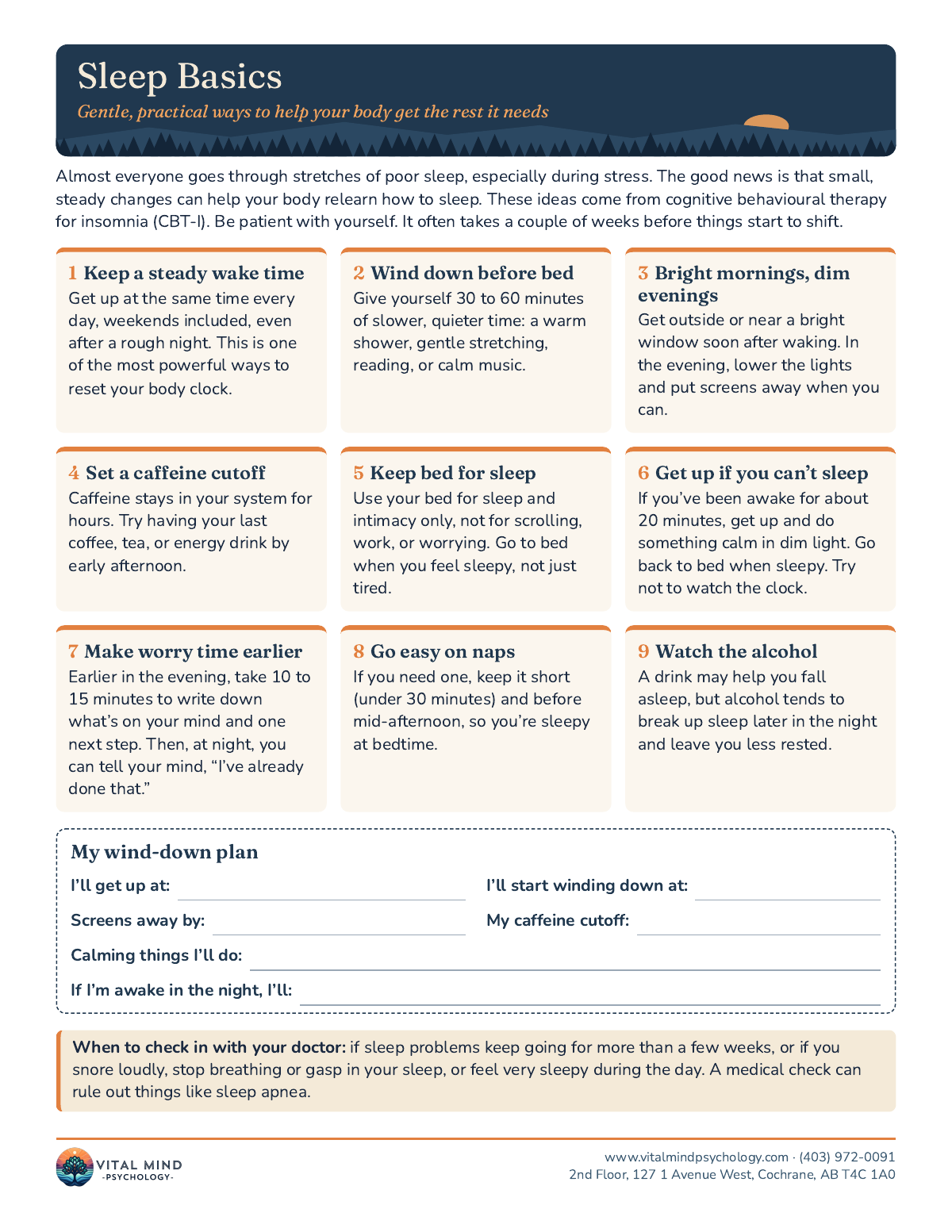
Download the Free Handout (PDF)
Where these ideas come from
The tips on this handout come from cognitive behavioural therapy for insomnia, often called CBT-I. It's a well-researched approach that focuses on resetting your body clock and helping your bed feel like a place for sleep again, rather than a place for worrying.
The nine sleep basics
- Keep a steady wake time, every day, weekends included, even after a rough night.
- Wind down before bed with 30 to 60 minutes of slower, quieter time.
- Bright mornings, dim evenings. Get daylight soon after waking and lower the lights at night.
- Set a caffeine cutoff, ideally by early afternoon.
- Keep bed for sleep and intimacy, not scrolling, work, or worrying.
- Get up if you can't sleep. After about 20 minutes awake, do something calm in dim light and go back when sleepy.
- Make worry time earlier. Write down what's on your mind, and one next step, earlier in the evening.
- Go easy on naps. Keep them under 30 minutes and before mid-afternoon.
- Watch the alcohol. It may help you fall asleep, but tends to break up sleep later in the night.
Making your own wind-down plan
The bottom of the handout has a short plan to fill in: what time you'll get up, when you'll start winding down, when screens go away, your caffeine cutoff, a few calming things you'll do, and what you'll do if you're awake in the night. Writing it down makes it much easier to follow when you're tired.
A few gentle reminders
- Pick one or two changes to start with rather than all nine at once.
- Be patient. It often takes a couple of weeks before things start to shift.
- A bad night now and then is normal and doesn't undo your progress.
When to check in with your doctor
If sleep problems keep going for more than a few weeks, or if you snore loudly, stop breathing or gasp in your sleep, or feel very sleepy during the day, it's worth talking to your doctor. A medical check can rule out things like sleep apnea.
Download the Free Handout (PDF)
Looking for more? Browse our other free handouts, including grounding skills and a window of tolerance worksheet.
If you'd like support working through this with someone, the counsellors at Vital Mind Psychology in Cochrane are here to help.