
Autistic Burnout or Depression? Free Reflection Sheet
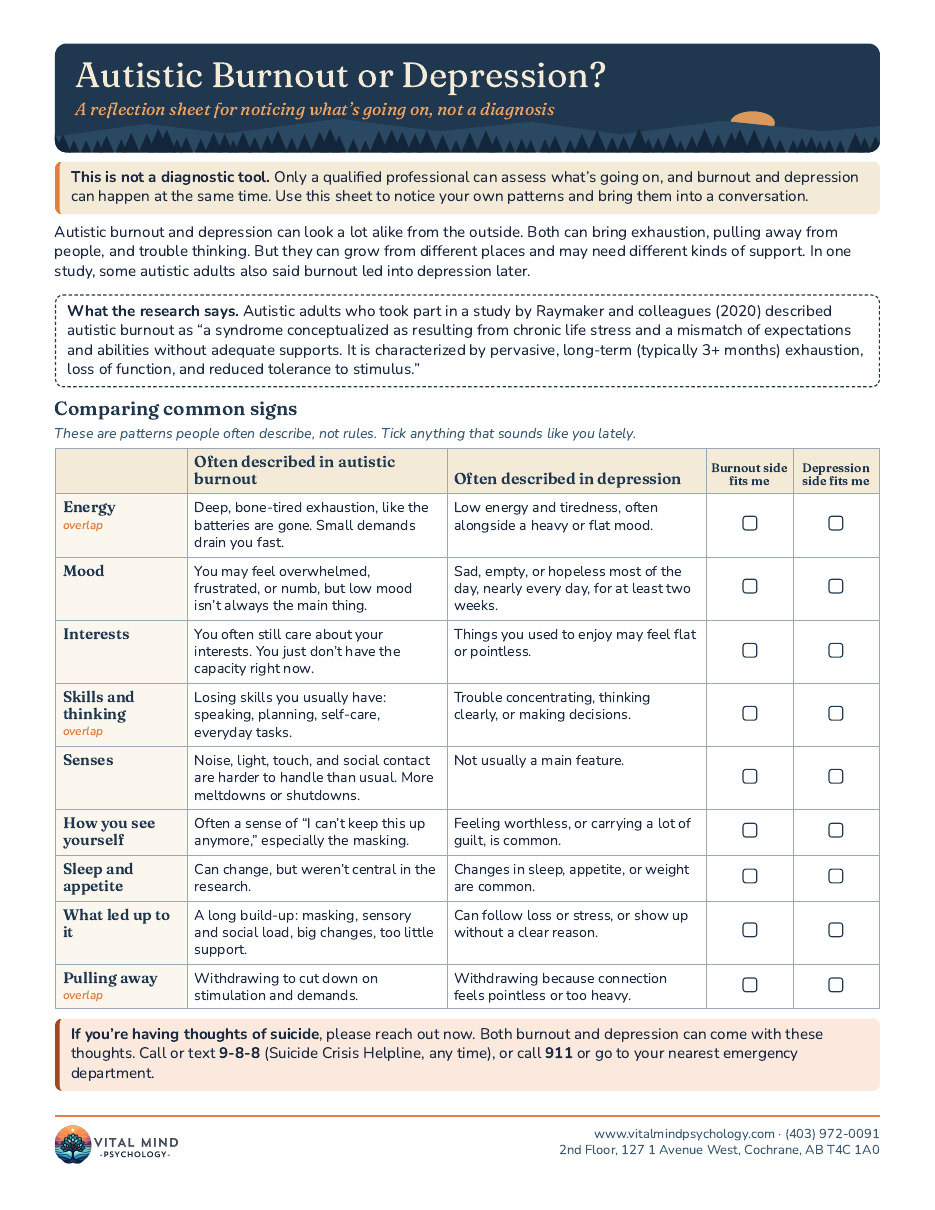
Autistic burnout and depression can look a lot alike. Both can bring exhaustion, pulling away from people, and trouble thinking clearly. But they can come from different places, and what helps one doesn't always help the other. This free printable sheet helps you notice your own patterns and bring them into a conversation with a professional. It isn't a diagnosis.
Download the Free Reflection Sheet (PDF)
What is autistic burnout?
Many autistic adults know burnout well, even if they didn't have a name for it for a long time. In a study led by Dora Raymaker and colleagues (2020), autistic adults described it as "a syndrome conceptualized as resulting from chronic life stress and a mismatch of expectations and abilities without adequate supports. It is characterized by pervasive, long-term (typically 3+ months) exhaustion, loss of function, and reduced tolerance to stimulus."
Depression shares some of those features, like low energy and trouble concentrating. The difference often shows up in the details. Someone in burnout may still care about their interests but have no capacity for them right now. Someone who is depressed may find that those same interests feel flat or pointless. The two can also happen at the same time, and some people in that study said burnout later led into depression.
What's on the sheet
The sheet is two pages.
- A side-by-side comparison. Nine areas, including energy, mood, interests, skills, senses, and what led up to it, with what's often described in autistic burnout next to what's often described in depression. Areas where the two tend to overlap are marked. You can tick whichever side fits you lately.
- Reflection questions. How long you've felt this way, what drains you most, whether real rest helps even a little, and which everyday tasks have gotten harder.
- Questions to bring to a professional. For example, whether this could be burnout, depression, or both, and whether they work in a neurodiversity-affirming way.
- Ideas for burnout recovery. Reducing demands, unmasking where it's safe, finding support, sensory rest, leaning into interests, and coming back slowly. The ones autistic adults in the Raymaker study linked with recovery are marked with a star.
- A short recovery plan you can fill in.
How to use it
- Read the comparison as patterns people often describe, not rules. Very few people fit neatly on one side.
- Fill it in when you have a bit of energy, and skip anything that doesn't fit.
- Bring it to your psychologist, counsellor, or doctor. It can make a hard conversation easier to start.
- It's worth asking your doctor to rule out physical causes too, like thyroid problems, low iron, or sleep problems.
A few things to keep in mind
- Some depression advice may not suit burnout. Pushing yourself to do more can help some people with depression, but it can deepen burnout. That's one more reason to get support from someone who understands both.
- Rest is part of recovery, not failure. Burnout often takes months to lift, and adding demands back gradually matters.
- Your nervous system is part of the picture. If you're not sure whether you're overwhelmed or shut down, our window of tolerance worksheet can help you notice where you are.
If you're having thoughts of suicide, please reach out now. Call or text 9-8-8 (the Suicide Crisis Helpline, any time), or call 911 or go to your nearest emergency department.
Download the Free Reflection Sheet (PDF)
Looking for more? Browse our other free handouts, including an ADHD brain dump worksheet and grounding skills.
If you'd like support from people who take a neurodiversity-affirming approach, the team at Vital Mind Psychology in Cochrane is here to help.